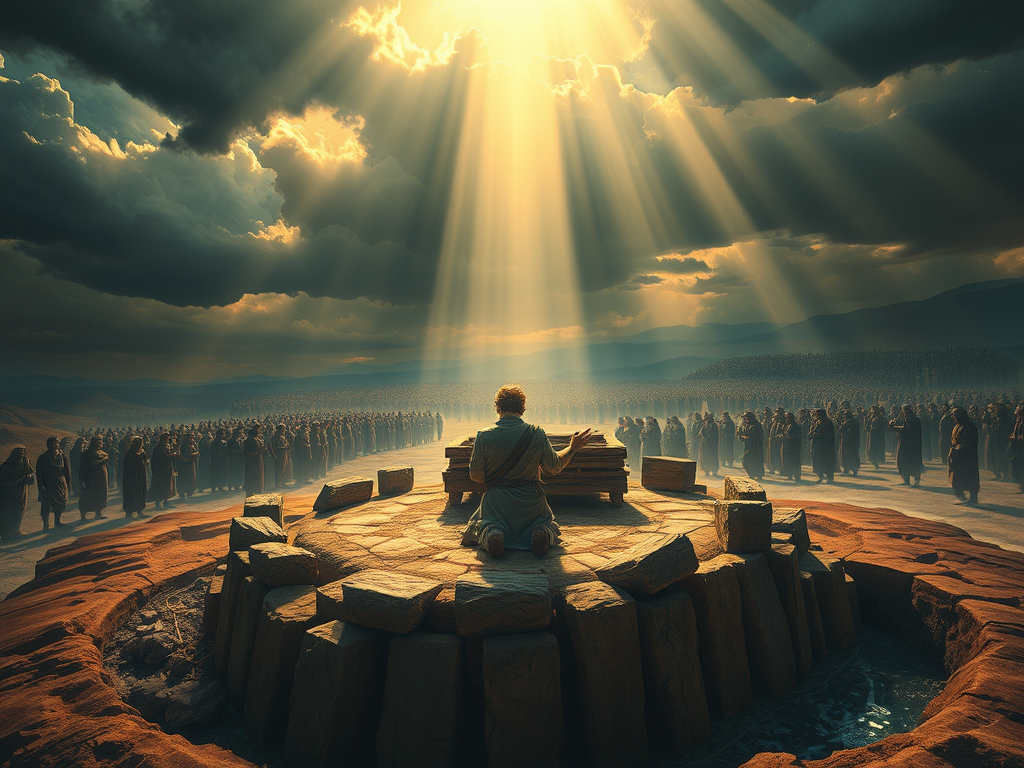
In the annals of biblical history, few stories captivate the imagination quite like the showdown between Elijah and the prophets of Baal on Mount Carmel. This epic tale, found in 1 Kings 18, is a testament to the power of faith and the might of the one true God. But beyond the dramatic contest and the fire from heaven lies a profound lesson about prayer that often goes overlooked.
The story begins in a time of deep spiritual crisis for Israel. The northern kingdom had fallen into idolatry under the rule of the wicked King Ahab and his wife Jezebel. The worship of Baal, a Canaanite deity, had become widespread, leading to horrific practices including child sacrifice. Into this dark period, God sent the prophet Elijah to confront the evil and call the people back to true worship.
After three years of drought—a divine punishment for Israel’s unfaithfulness—Elijah challenged the prophets of Baal to a contest on Mount Carmel. The rules were simple: each side would prepare a sacrifice, and the god who answered by fire would be proven true. What followed was a dramatic display of the futility of false gods and the awesome power of the Lord.
While the 450 prophets of Baal danced, shouted, and even cut themselves in a frenzied attempt to summon their deity, Elijah waited patiently. When his turn came, he rebuilt the altar of the Lord with 12 stones, symbolizing the unity of Israel’s tribes. He then drenched the sacrifice and altar with water, making the impending miracle all the more impressive. With a simple prayer, fire fell from heaven, consuming not only the sacrifice but the stones, dust, and water as well.
The people fell on their faces, crying out, “The Lord—he is God!” It was a moment of national repentance and revival. But the story doesn’t end there. What follows is a powerful lesson on the nature of transformative prayer.
Elijah declared to King Ahab that rain was coming, ending the long drought. He then climbed to the top of Mount Carmel and began to pray. This is where we see four crucial characteristics of prayers that change destinies:
- Word-Based Prayer
Elijah’s prayers were rooted in God’s promises. Both the drought and its end were foretold in Deuteronomy 11, where God warned of the consequences of idolatry and promised restoration upon repentance. When we pray according to God’s Word, we align ourselves with His will and purposes. - Spirit-Led Prayer
Though God had promised rain would return after repentance, the timing was not specified. Elijah discerned through the Spirit that now was the moment. As believers today, we have the Holy Spirit to guide our prayers and give us insight into God’s timing and purposes. - Unglamorous, Slow, and Persistent Prayer
This is perhaps the most overlooked aspect of Elijah’s prayer. While the contest on Mount Carmel was public and dramatic, the prayer for rain was private and persistent. Elijah bowed low to the ground, his face between his knees, and prayed repeatedly. Seven times he sent his servant to look for signs of rain before the smallest cloud appeared. This kind of prayer is often unseen, unglamorous work that requires perseverance and faith. - Audacious Prayer
Even when the first tiny cloud appeared, Elijah acted with bold faith. He sent word to Ahab to prepare for a deluge, demonstrating unwavering confidence in God’s answer. This audacity culminated in Elijah outrunning Ahab’s chariot to Jezreel—a supernatural demonstration of God’s empowering strength.
These four elements combine to form a powerful model for prayer that can truly change the world around us. It’s a call to move beyond surface-level, casual prayers to engage in the hard work of intercession.
The New Testament affirms the enduring relevance of Elijah’s example. James 5:17-18 reminds us, “Elijah was a human being, even as we are. He prayed earnestly that it would not rain, and it did not rain on the land for three and a half years. Again he prayed, and the heavens gave rain, and the earth produced its crops.”
This passage emphasizes that Elijah was not some superhuman figure, but a person just like us. The same power that was available to him is available to every believer today. We are invited—even challenged—to engage in the kind of prayer that moves mountains and brings revival.
The question is, who will take up this mantle? Who will commit to the hidden, persistent work of prayer? It’s easy to be drawn to the spectacular moments of public ministry, but the real transformative power often lies in the unseen moments of fervent intercession.
As we reflect on this story, we’re reminded that prayer is not about making God do what He hasn’t planned, but about releasing His will on earth. It’s about aligning ourselves with His purposes and persisting until we see His promises fulfilled.
In a world that often feels chaotic and far from God, we need people who will stand in the gap through prayer. People who will root themselves in God’s Word, listen to the Spirit’s leading, persist through seeming silence, and boldly claim God’s promises.
Whether you’re facing personal challenges, praying for loved ones, or interceding for your community or nation, let Elijah’s example inspire you. Don’t give up after the first or second or even sixth time of prayer. Keep seeking, keep knocking, keep asking. The cloud may start small, but faithful prayer can lead to an outpouring that changes everything.
Remember, even when your physical strength fails, prayer remains a powerful tool. As Isaiah 40:31 promises, “But those who hope in the Lord will renew their strength. They will soar on wings like eagles; they will run and not grow weary, they will walk and not be faint.”
Let us be a generation known for our persistence in prayer, our faith in God’s promises, and our willingness to do the hidden work that precedes revival. For it is through such prayer that we partner with God to see His kingdom come and His will be done on earth as it is in heaven.

Leave a Reply