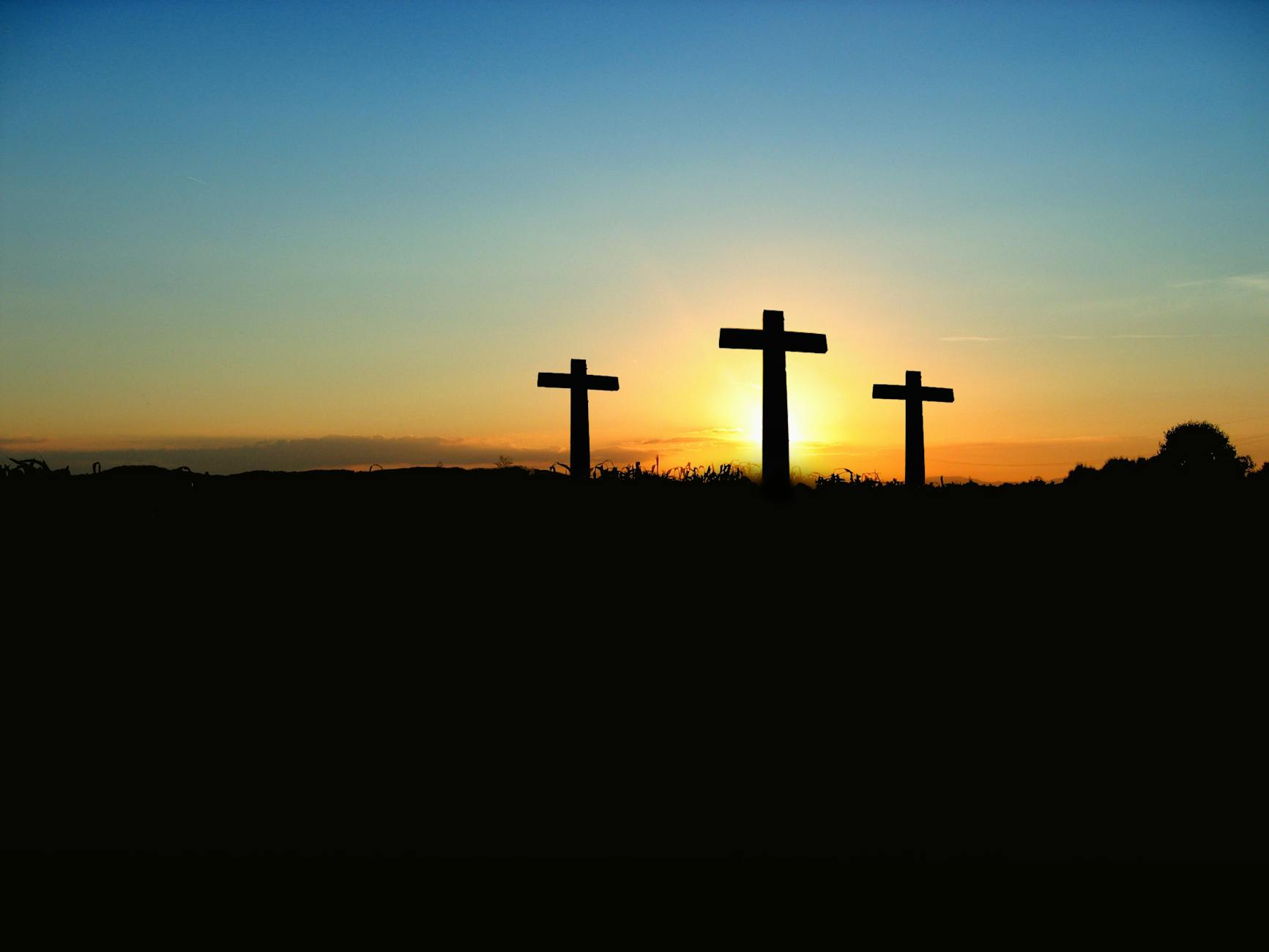
There are moments in Scripture so sacred, so heavy with meaning, that they demand more than casual reading. They require us to slow down, to remove our shoes on holy ground, and to let the full weight of what happened settle into our souls.
The final hours of Jesus Christ stand as the centerpiece of all human history. These are not merely historical events to be studied from a distance—they are the very moments that determined our eternity and continue to shape everything about our lives today.
At the Table: The Last Supper
Before the darkness descended, there was a meal. Jesus gathered with His closest friends, knowing exactly what was coming. He knew that Judas had already made his deal for thirty pieces of silver. He knew Peter would deny Him before morning. He knew they would all scatter when the soldiers arrived.
And yet, He sat with them anyway.
In that upper room, Jesus took an ancient tradition—the Passover meal His people had celebrated for centuries—and revealed its true meaning. Every lamb that had been sacrificed, every cup that had been poured, every story of deliverance that had been told around Passover tables throughout history had been pointing to this moment.
“Take and eat; this is my body,” He said, breaking the bread. His body would not be taken by force. It would be given willingly, broken so that we could be made whole.
“This is my blood of the covenant, which is poured out for many for the forgiveness of sins,” He continued, lifting the cup. This was the new promise—complete forgiveness purchased through sacrifice.
The table reminds us that our Savior chose to give Himself. Before the nails, before the thorns, before the cross, there was a choice. And He chose us.
In the Garden: The Agony of Gethsemane
If the upper room was sacred, the Garden of Gethsemane is the Holy of Holies of Christ’s earthly life. Here, we must tread carefully, for we are witnessing something almost too profound for words.
Jesus took Peter, James, and John deeper into the garden with Him. “My soul is overwhelmed with sorrow to the point of death,” He told them. Then He went a little farther and fell face down on the ground.
Three times He prayed: “My Father, if it is possible, may this cup be taken from me. Yet not as I will, but as you will.”
The cup He spoke of contained the full wrath of God against every sin ever committed. It held every betrayal, every act of violence, every moment of pride, every selfish thought—the accumulated guilt of all humanity. And Jesus was about to drink it to the last drop.
Meanwhile, His closest friends couldn’t even stay awake. Three times He returned to find them sleeping. “The spirit is willing, but the flesh is weak,” He said, describing not just them but all of us.
We see ourselves in those sleeping disciples. We promise to stand by Jesus, yet we drift away when the night grows dark. We grow distracted and spiritually exhausted. We choose our own comfort over His calling.
But Jesus stayed awake for us. When the crushing weight of the world’s sin pressed upon Him, He did not flee. He surrendered His will to the Father’s, and in doing so, He secured our salvation.
At the Trial: The Silence of the Lamb
The arrest came with torches and swords, with a betrayer’s kiss and a mob’s fury. They dragged Jesus before the religious leaders, then before Pilate, the Roman governor.
False witnesses came forward. The crowd that had welcomed Him with palm branches now screamed for His crucifixion. Peter, who had sworn he would die before denying Jesus, cursed and swore he didn’t even know Him. When the rooster crowed, Peter remembered Jesus’s words and wept bitterly.
Judas, consumed by remorse but not true repentance, returned the blood money and hanged himself.
And through it all, Jesus remained largely silent. He didn’t defend Himself. He didn’t call down the legions of angels at His disposal. He stood in our place, accepting the punishment we deserved.
Pilate offered to release Him, but the crowd chose Barabbas—a murderer—instead. “Crucify Him!” they shouted. Pilate washed his hands, claiming innocence, but the deed was done.
Before we judge them too harshly, we must recognize that their brokenness is our brokenness. Our sins, our compromises, our daily denials are exactly what made the cross necessary.
On the Cross: It Is Finished
They mocked Him, placing a crown of thorns on His head and a purple robe on His shoulders. “Hail, King of the Jews!” they sneered, spitting on Him and striking Him.
They led Him to Golgotha—the Place of the Skull. There they crucified Him between two criminals, dividing His clothes and casting lots for them.
Above His head, they placed a sign: “This is Jesus, the King of the Jews.”
Even as He hung dying, they taunted Him. “He saved others, but He can’t save Himself! Come down from the cross if You’re really the Son of God!”
But that was precisely the point. He could have saved Himself. He chose not to because He was busy saving us.
From noon until three in the afternoon, darkness covered the land. Then Jesus cried out in a loud voice, “My God, My God, why have You forsaken Me?”
In that moment, the Father turned His face away as Jesus became sin for us. The fellowship that had existed from eternity past was broken so that our fellowship with God could be restored.
“It is finished,” Jesus declared. And He gave up His spirit.
Immediately, the curtain in the temple—the thick veil that separated the Holy of Holies from the rest of the temple—tore from top to bottom. The earth shook. Rocks split. Tombs opened.
The centurion who had overseen countless crucifixions looked at everything that had happened and declared, “Surely He was the Son of God!”
The Response: Living in Light of the Cross
We cannot look at the cross as merely a historical event. It is something done both by us and for us. Our pride, our rebellion, our daily failures held Him there. Yet in His infinite mercy, He stayed to pay a debt we could never afford.
The cross calls for a response. It demands that we acknowledge our sin, surrender our burdens, and accept the forgiveness purchased with blood.
What will you do with the cross? Will you rush past it in your hurry to get to Easter morning? Or will you sit in its shadow, letting the reality of such sacrificial love transform you?
The price has been paid. The veil has been torn. The way to the Father stands open because of what Jesus accomplished on that brutal Friday we now call Good.
Let the weight and wonder of the cross settle over your heart this Holy Week.

Leave a Reply