There’s something profoundly deceptive about artificial fruit. From a distance, it looks convincing—vibrant, perfectly shaped, abundantly displayed. But up close, the illusion falls apart. No life flows through those branches. No nourishment exists in that fruit. It’s all plastic, held together with tape and wishful thinking.
This is the perfect picture of how many of us approach our spiritual lives. We wake up determined to manufacture patience for our morning commute. We duct-tape plastic joy onto our stressful workdays. We force fake peace into our chaotic homes. From a distance, we might look like we have it all together. But up close, there’s no actual life—just exhaustion, bitterness, and the constant fear that the tape will finally give out.
The Vine and the Branch
On the night before His crucifixion, Jesus offered a radically different way to live. In John 15:5, He declared, “I am the vine; you are the branches. If you remain in me and I in you, you will bear much fruit; apart from me you can do nothing.”
Notice the profound shift in perspective. You are not a factory trying to produce a product. You are a branch. And branches don’t strive, grit their teeth, or manufacture fruit through sheer willpower. Branches simply stay connected to the vine. The vine does all the heavy lifting—pulling water and nutrients from deep soil, sending life-giving sap into every branch. The fruit is just the natural, beautiful overflow of that connection.
This is the difference between manufacturing and abiding. The manufacturer duct-tapes dead fruit onto dead branches. The abider stays connected to Jesus and lets the life of God naturally overflow into the world.
Abiding at Work: Sacred Labor
Most of us will spend approximately 90,000 hours of our lives at work—roughly 43 years of waking hours. If we only know how to abide with Jesus on Sunday mornings or in quiet living rooms, we’re missing the main mission field of our lives.
We’ve absorbed a dangerous lie: there’s a line between “sacred” and “secular.” Reading your Bible is sacred. Managing a spreadsheet is secular. Praying is sacred. Pouring concrete is just paying the bills.
But Scripture demolishes this division. Go back to Genesis 2:15, before sin entered the world: “The Lord God took the man and put him in the Garden of Eden to work it and take care of it.” Work existed before the Fall. God Himself works—creating, ordering, designing—and then creates humans in His image and gives them a job.
Work is not a curse. Work is a holy calling.
When you manage a project, teach a classroom, design an app, or run a business with integrity, you’re reflecting a God who brings order out of chaos and beauty out of raw material. Dorothy Sayers captured this perfectly: “The church’s approach to an intelligent carpenter is usually confined to exhorting him not to be drunk and disorderly in his leisure hours, and to come to church on Sundays. What the church should be telling him is this: that the very first demand that his religion makes upon him is that he should make good tables.”
Your actual work matters to God.
The curse didn’t create work—it made work hard. It added thorns, friction, and frustration. And that’s where our tendency to manufacture kicks in. When disconnected from the Vine, we see our jobs only as survival, status, or ego. Coworkers stop being image-bearers and become tools to help us climb the ladder or competitors we need to beat.
But Colossians 3:23-24 rewires everything: “Whatever you do, work at it with all your heart, as working for the Lord, not for human masters, since you know that you will receive an inheritance from the Lord as a reward.”
Your boss is not your vine. Your paycheck is not your vine. Your quarterly review is not your vine. Jesus is your Vine. Your worth is fixed at the cross. Your future is secured by the resurrection. That truth frees you to walk into work as a non-anxious presence, able to serve without defending your ego in every meeting or undermining coworkers to get noticed.
The world asks, “Is it profitable?” God asks, “Is it fruitful?”
Abiding in the Neighborhood: Love of the Stranger
If work is where we spend most of our hours, the neighborhood is where our faith becomes most visible. Yet despite living closer together than ever, we’ve built literal and emotional fences.
The New Testament introduces a powerful concept: philoxenia—literally, “love of the stranger.” We translate it as hospitality. Hebrews 13:2 urges, “Do not forget to show hospitality to strangers, for by so doing some people have shown hospitality to angels without knowing it.”
Henri Nouwen defined hospitality as “the creation of free space where the stranger can enter and become a friend instead of an enemy. Hospitality is not to change people, but to offer them space where change can take place.”
The world runs on xenophobia—fear and suspicion of the stranger. The abiding life runs on philoxenia—love of the stranger.
You cannot manufacture that kind of consistent mercy. If you try to “be a good neighbor” from sheer willpower, you’ll bake cookies once, get offended they weren’t appreciated enough, and shut down. But when you’re abiding in Christ, you don’t need your neighbor to validate you. You don’t need the cashier to be kind back. You don’t need the stranger’s approval. You’re free to just love.
As 1 John 4:19 reminds us, “We love because he first loved us.”
When you abide, that stressed-out cashier is no longer “the help.” They’re a soul made in the image of God. The transaction becomes an opportunity for fruit—a calm, unhurried presence when everyone else is impatient, a sincere word of encouragement, a generous tip that says, “I see you. You matter.”
Abiding Together: The Trellised Life
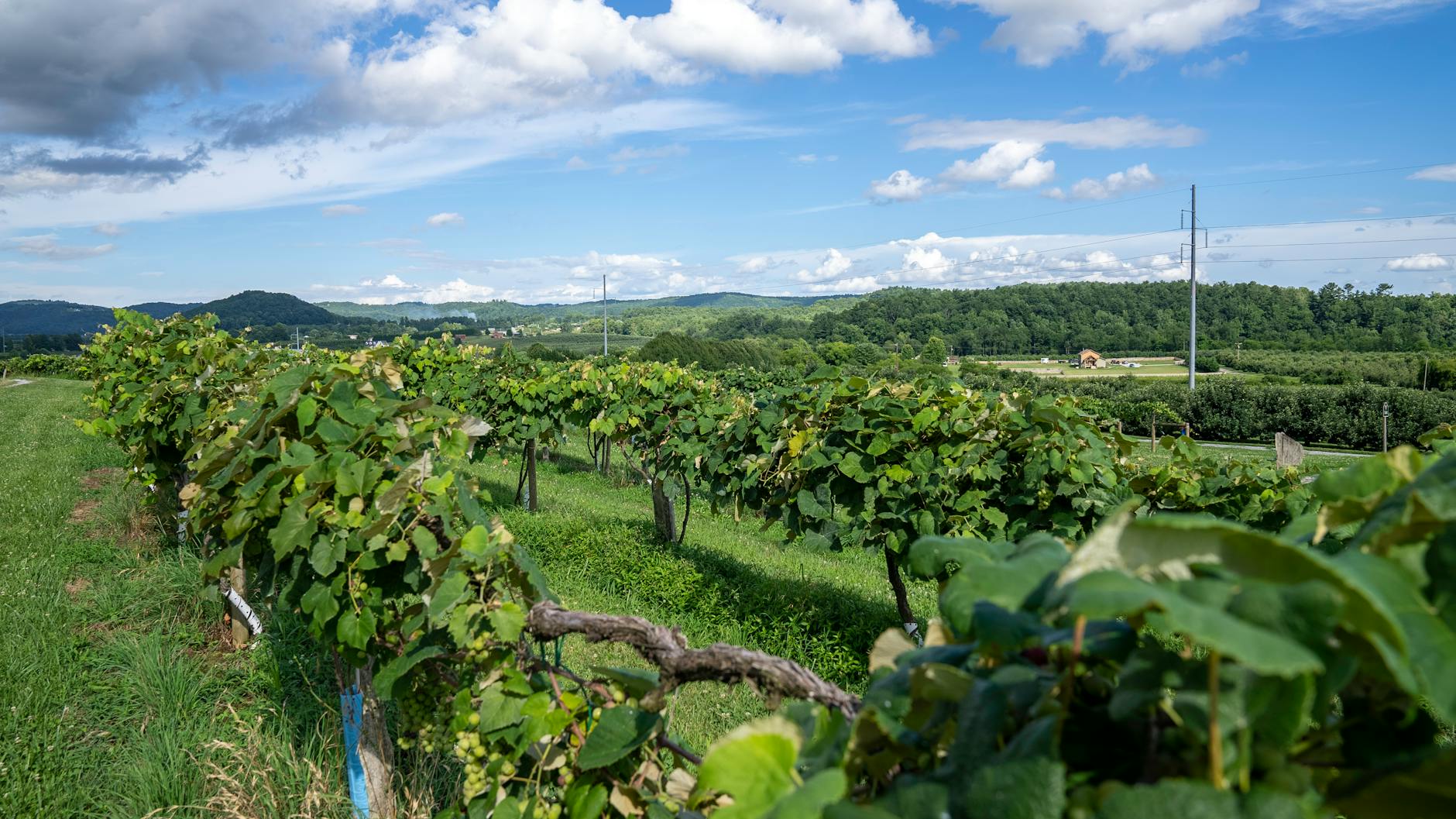
Wild grapevines look impressive from a distance—big bushes, lots of leaves, sprawling in every direction. But they spend almost all their energy on leaves, not fruit. What little fruit they produce often gets ruined on the ground.
That’s a picture of an undisciplined life—wanting freedom with no structure, growth with no pruning, intimacy with God without accountability.
By contrast, a trellised vine is lifted up and supported. It’s pruned regularly. The gardener constantly cuts back extra growth that looks impressive but doesn’t actually produce fruit. All of that discipline is aimed at one thing: maximum fruitfulness.
This is what Jesus describes in John 15:1-2: “I am the true vine, and my Father is the vinedresser. Every branch in me that does not bear fruit he takes away, and every branch that does bear fruit he prunes, that it may bear more fruit.”
A discipled life is a trellised life—willingly trained, ordered, and pruned by the Word of God, the Spirit of God, and the people of God for maximum fruitfulness.
When you look closely at a row of vines on a trellis, it’s hard to tell where one vine ends and the next begins. The branches are woven together, and the fruit hangs in clusters that can’t be traced back to any single branch.
That’s what abiding together in Christ looks like. Our lives become so intertwined in Jesus that my growth supports your growth, your strength holds up my weakness, and together we produce a harvest of peace, forgiveness, and love that no single person could manufacture alone.
The Overflow of Real Life
You cannot sustain plastic fruit forever. The tape eventually gives out. But when you abide in Christ—at work, in your neighborhood, in your church family—real life flows. Not manufactured. Not forced. Just the natural, beautiful overflow of staying connected to the True Vine.
And that fruit? It’s meant to nourish a hungry world.

Leave a Reply