For four hundred years, they waited. Thirteen to sixteen generations lived and died knowing nothing but the crack of the whip and the weight of the brick. To put that in perspective, four hundred years ago from today was 1625—the era of the Mayflower and Plymouth Rock. Imagine every ancestor you can name living under the same crushing oppression.
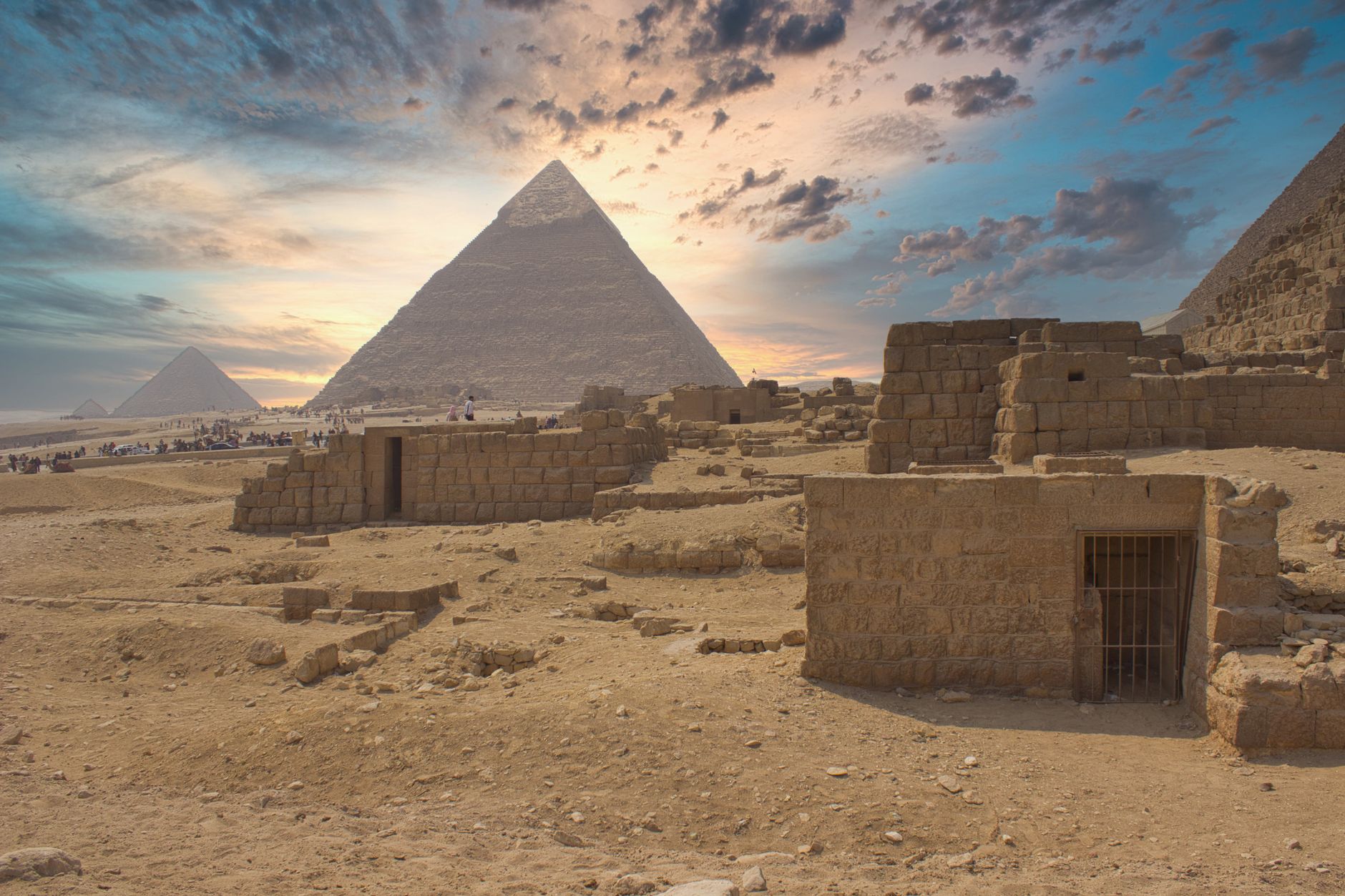
This was Israel’s reality in Egypt. But their bondage wasn’t just physical—it was spiritual, a complete distortion of their design.
The Word That Changes Everything
In English translations of Exodus, we read about Israel’s harsh “labor” and “work” under Pharaoh. But the Hebrew word used is avodah (עֲבוֹדָה)—a single word that requires three English words to capture its full meaning: work, worship, and service.
This linguistic reality demolishes our modern compartmentalization of life. We’ve split existence down the middle: Sunday is for worship, Monday is for work. One is sacred, the other secular. But avodah recognizes no such divide.
The entire Exodus narrative hinges on one central question: Who gets your avodah?
Israel avodah-ed Pharaoh as slaves. God demanded they avodah Him in worship. The showdown between Moses and Pharaoh wasn’t about independence—it was about whose service would define Israel’s existence.
That same question confronts us today.
The Character Behind the Demand
Some people wonder if God is a cosmic narcissist, demanding worship because He needs attention or affirmation. This misunderstands everything.
God is not jealous of you—He is jealous for you. He is jealous for your peace when anxiety tries to rob you. He is jealous for your marriage when temptation tries to break you. He is jealous for your future when your past tries to define you.
He doesn’t demand worship to fill an empty cup. He demands it because He knows that when you serve anything else, it will leave you broken. He wrote the owner’s manual for the human soul.
God’s ways are not restrictive rules designed to strip away our freedom; His ways are the only way for us to experience true freedom.
An Invitation to Know
Throughout Exodus chapters 5-10, a phrase keeps appearing. In Exodus 9:14, God says through Moses: “I will send the full force of my plagues…so you may know that there is no one like me in all the earth.”
The Hebrew word for “know” here is yada (יָדַע)—not head knowledge or memorized facts, but experiential, intimate knowing. It’s the difference between googling information about a ribeye steak and actually cutting into one, tasting the butter-rich marbling, experiencing the flavor for yourself.
The tragic problem with many who fill church seats is they have “Google knowledge” of God. They know about Him but haven’t tasted and seen that the Lord is good.
Later, in Exodus 29:46, God reveals His ultimate purpose: “They will know that I am the Lord their God, who brought them out of Egypt so that I might dwell among them.”
The goal was never just relocation—it was relational habitation. Deep yada. Intimate togetherness.
The Clash of Kingdoms
When Moses walked into Pharaoh’s throne room, he wasn’t just confronting a stubborn king. Egypt was spiritually occupied territory, aligned with dark powers that promised prosperity in exchange for devotion.
When Moses’ staff became a serpent, Pharaoh’s magicians replicated the miracle through their “secret arts.” This wasn’t stage magic—it was genuine dark power granted by the principalities they served.
But God didn’t step into Egypt simply to punish. He marched in to systematically expose and judge the demonic rulers holding humanity in spiritual terror.
Each plague targeted specific Egyptian deities:
- The Nile to blood struck at Hapi and Khnum, gods of the river
- The frogs humiliated Heqet, the frog-goddess of fertility
- The gnats defeated Geb, god of the earth—even the magicians admitted, “This is the finger of God”
- The flies overwhelmed Khepri, the insect-headed god of creation
- The livestock plague silenced Hathor and Apis, the sacred cow and bull deities
- The boils proved Isis and Sekhmet, goddesses of healing, powerless
- The hail weaponized the elements against Nut, Seth, and Shu
- The locusts exposed Bastet and Osiris, protectors of agriculture
- The darkness shut down Ra, the supreme sun god
Throughout these plagues, God made a radical distinction: “This plague will not touch Israel.” The Israelites did nothing to earn that safety. They were spared entirely by unmerited grace.
But notice—this sequence was also grace toward Egypt. God could have wiped them out instantly. Every plague was a mercy drop, every delay a window for repentance.
The Four Compromises
As Pharaoh’s grip weakened, he shifted from domination to negotiation, offering four compromises that the enemy still whispers today:
1. “Worship, but stay in the land” (Exodus 8:25)—Blend faith with old patterns. Worship without transformation. But true worship requires leaving the old world behind.
2. “Go, but don’t go very far” (Exodus 8:28)—Keep one foot in Egypt. Partial obedience is disobedience. Jesus said, “If you hold to my teaching…you will know the truth, and the truth will set you free” (John 8:31-32).
3. “Go, but leave the children” (Exodus 10:11)—Keep the next generation in the system. But God’s call is multigenerational. We don’t leave our sons and daughters in bondage.
4. “Worship, but leave your flocks” (Exodus 10:24)—Give God your heart but keep your resources in Egypt.
To this final compromise, Moses delivered the ultimate line of defiance: “Not a hoof is to be left behind” (Exodus 10:26).
The Declaration of Dependence
Political freedom can secure civic liberty, but it cannot secure your soul from eternal death. It can break a political chain but cannot break a generational curse or the weight of personal sin.
Before the first plague fell, God issued His own declaration in Exodus 6:6-8—not a Declaration of Independence, but a Declaration of Dependence:
“I will bring you out… I will free you… I will redeem you… I will take you as my own… I will be your God… I will bring you to the land… I will give it to you.”
Seven sovereign “I will” statements. No “you will.” No performance required. Your freedom rests entirely on His “I will.”
When you realize He carries the full weight of your rescue, your response becomes Moses’ response: “Not a hoof left behind.”
Not a habit left in Egypt. Not a child left in bondage. Not a dollar chained to Pharaoh’s economy. Not a corner of your life held back from the God who saves.
Stop negotiating with Pharaoh. Stop living half-free. Stop giving God your Sunday while Egypt owns your Monday.
The Great I AM has declared your freedom. Now declare your dependence—and watch Him do what only He can do.

Leave a Reply